
“The cancer is over… the lymphedema is not!”
This is a quote from one of my patients that has been indelibly etched in my mind for several years.
Cancer has become a scourge for the Western world in recent decades.
All of us know someone who has gone through cancer or have lost someone to cancer.
The factors that cause it are many and multidimensional.
Poor diet, lack of movement and activity in life, systematic exposure to radiation (mobile phones, electronic devices, etc.), environmental pollution, stress and anxiety .
Unfortunately, all of the above combine on an almost daily basis to “give birth” to cancer.

The treatment and management of cancer is quite painful and causes even more suffering and stress.
Surgery, radiotherapy, chemotherapy, hormone therapy, alone or in any combination, cause patients to suffer for a long time.
The implications are many: Scarring from surgery, burns sometimes from radiation, hair loss from chemotherapy, dizziness and fatigue from heavy medication, weight loss and a general change in appearance.
Add the uncertainty, anxiety, the massive and unhealthy (often damaging) flow of information about the patient’s problem and the financial costs that bring additional worry and stress.
The ‘mix’ is really difficult to manage.

But even if there are complications, there is always an end to the whole adventure.
Usually the outcome is good, as the development of medical science has significantly increased survival rates while maintaining the fewest possible complications.
The battle is long and difficult, but optimism must be the most important weapon for patients. After all, battles are fought to be won.
Unfortunately, no battle ends without casualties.
Depending on the size of the operation, the accompanying treatments and the patient’s previous health condition, there will be minor or major complications.
One of the most common complications of cancer is lymphedema.
Cancer, both as a disease and in its management, essentially affects the lymphatic system.
Part of the management is often the removal of 2-3 to several lymph nodes.
In addition, irradiation of the tissues is usually performed locally, including parts of the lymphatic system.
Finally, chemotherapies affect the whole body in general and therefore also the lymphatic function.
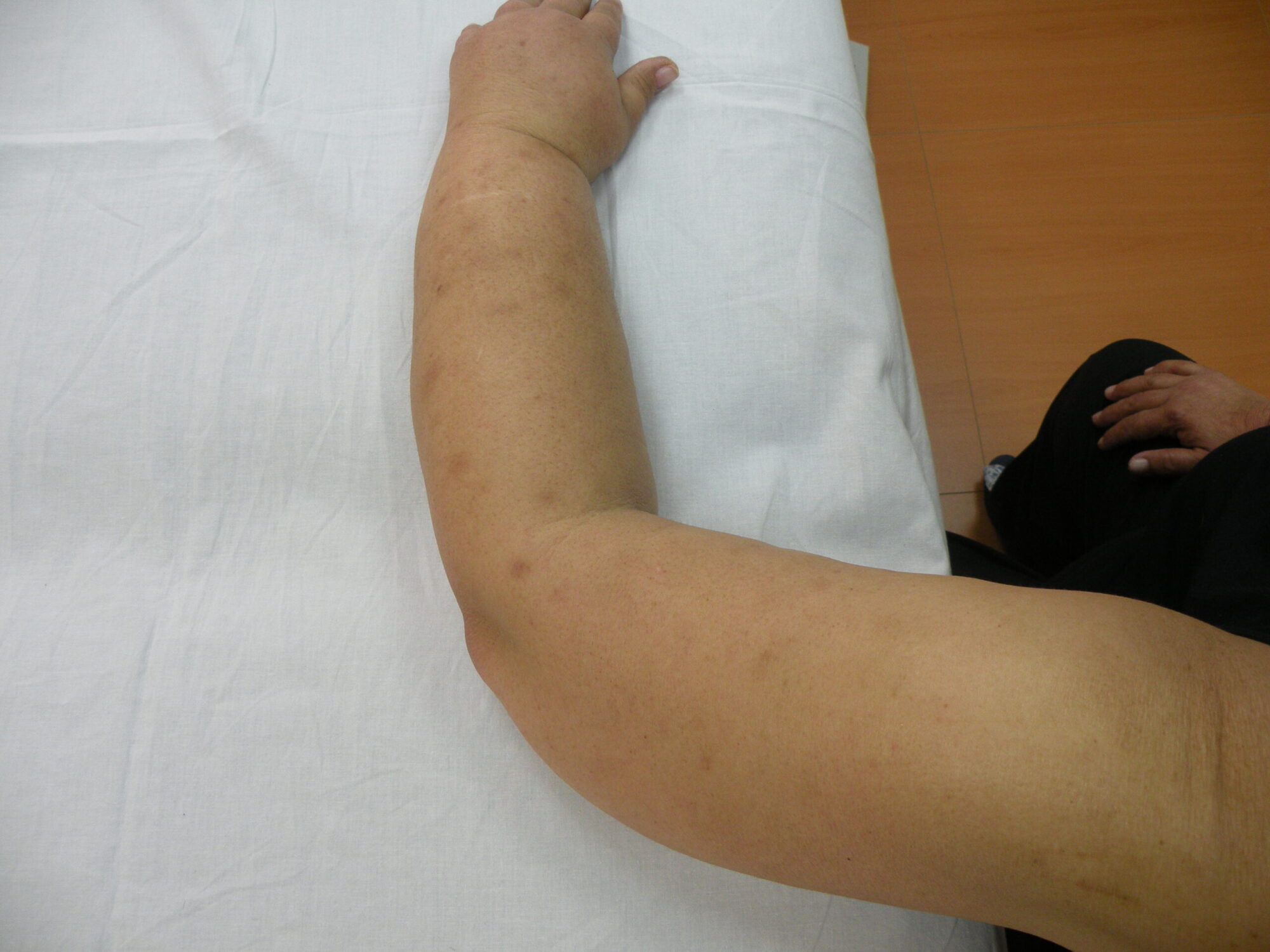
The likelihood of lymphedema depends on:
- The type and technique of surgery
- If there were radiation
- Although how many lymph nodes were removed
- If the lymph nodes are infiltrated
- The patient’s previous condition
Unfortunately, there are no studies or reports linking the occurrence of oedema to psychology.
However, in clinical practice there are many times when we have seen edemas (as a result of a dysfunction of the lymphatic system?) without any serious pathology that would explain them.
Lymphedema is a chronic problem
The incidence rates of lymphedema vary depending on the above factors.
In any case, however, the occurrence of lymphedema is irreversible, at least according to current epidemiological data.
This means that the patient has to deal with a problem for the rest of his or her life.
This will sometimes have minor or major functional effects that will affect the person’s daily life, depending on the degree and severity of the lymphedema.
Lymphedema is not accompanied by pain. However, the lymph that develops it can become heavy, stiff, dysfunctional and prone to infection and inflammation.
As a consequence, we may develop musculoskeletal problems and painful conditions.
But there is another factor that has to do with the aesthetic part as the lymphedema is visible.
This aspect of swelling affects both the psychology and the dress/practical aspect.

In many cases, limbs with advanced lymphedema do not fit into the sleeve or pants, preventing the use of favorite clothes. Or in other cases, the patient has difficulty finding a suitable shoe for their swollen lower limb.
Lymphedema can therefore have all these classic psychological effects on a person, as with any chronic disease or condition.
For us, the patient must be treated comprehensively and comprehensively
Holistic physiotherapy, which we embrace and apply in Biofeedback, makes it extremely important to approach the person as a whole and not as an individual condition.
In the health sector we often refer to the treatment of diseases and illnesses but relatively rarely to the quality of life of the individual. Many therapeutic interventions treat the problem but ultimately improve the life of the ‘patient’?
There are now approaches that treat cancer as an autoimmune problem.
This means that cancer is not always due to an external cause, but the body itself “creates” neoplasms in response to a prolonged period of psychological stress.
That is why too often in cancer sufferers we discover huge psychological burdens in their past, which probably at some point “beat them up”!
Lymphedema, as a remnant of the battle against cancer, or a lingering ghost, can be another “burden” for the now healthy person.
When there is a “fight for life” there will almost always be “casualties” and complications.
However, it is important to reduce and manage them with early and effective intervention before they become a negative factor in the quality of life.
We should not wait for lymphedema to appear and settle before we decide to do something about it.

Information, guidance, and if necessary treatment, from a qualified physiotherapist even before surgery or other management measures required by the cancer is essential.
Of course, the management of the patient by the multidisciplinary team is the most modern approach in this field!
At Biofeedback we firmly believe that prevention is the best cure.
This is why we offer free of charge the first visit-information to anyone suffering from lymphedema or belonging to a high-risk group (e.g. people before or after cancer treatment).
Book your appointment at 210-4829303.

Triantafyllou Euripides
Centre Manager
PT, MSc, MLD/CDT Instructor

