
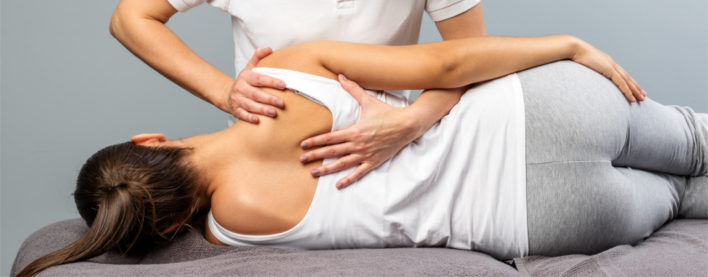
What is manual therapy?
Manual Therapy – A technique that is very often discussed among patients and presented as a treatment method with amazing results in musculoskeletal problems.
A surgery, an injury, or a chronic problem, e.g. back pain, sciatica, cervical syndrome, tendonitis, will inevitably lead the patient into the hands of a physical therapist.
The, until recently, use of machines without prior clinical consideration unfortunately did not have the expected results.
Modern physical therapy responds to outdated passive treatment techniques with manual therapy.
Manual therapy is a set of diagnostic and therapeutic techniques that are applied with the hands and are accompanied by a thorough and detailed history taking and a specifically justified treatment plan.
The goal shifts from simple relief to solving the real causes of the problem. For this reason, the use of machines is minimized and their place is taken by mobilization techniques and targeted exercise.
Manual therapy requires the patient to take an active role.
For this reason, from the very first sessions, the patient is invited to participate in an active program of strengthening exercises and retraining aimed at changing possible incorrect motor and static patterns.

Why is manual therapy considered such a unique technique?
The uniqueness of this particular technique lies in the fact that it is comprehensive and thorough.
It starts with a detailed assessment, and uses proven tests.
It is based on objective and subjective (from the patient’s perspective) findings, while also taking into account psychosocial elements that may arise from the evaluation.
All of this makes up the clinical reasoning upon which the therapeutic model is built, with specific stages, reassessments, and a defined duration and cost with great precision.
The therapist knows very well what he is touching, what he is mobilizing, and what the expected result is.
The machines are used simply and only for pain relief.

When is manual therapy applied?
Manual Therapy uses hands-on techniques to examine and evaluate – and restore where necessary:
- Joint movements of the spine at all levels
- Joint movements of limbs and smaller areas such as the lower jaw (a common cause of headache)
- Nervous tissue mobility – neurodynamic behavior in pathologies involving nervous tissue, e.g. sciatica
- Painful points of the fascia and related peripheral structures. It is not uncommon for the real cause of the pain to be located relatively far from its point of occurrence. For example, many times the treatment of a painful neck results from the restoration of a dysfunction in the shoulder.
- The strength, endurance and elasticity of the musculotendinous complex.
- Controlling the muscular balance of an area. Sometimes simply balancing muscular forces with appropriate exercise is enough in itself to solve the problem.
- Retraining, at a musculoskeletal and proprioceptive level, in proper ergonomics. A wrong position at work and on a daily basis may in itself be the main cause of a chronic musculoskeletal problem. The same applies to a bad technique in a sport, which a manual therapist must retrain.
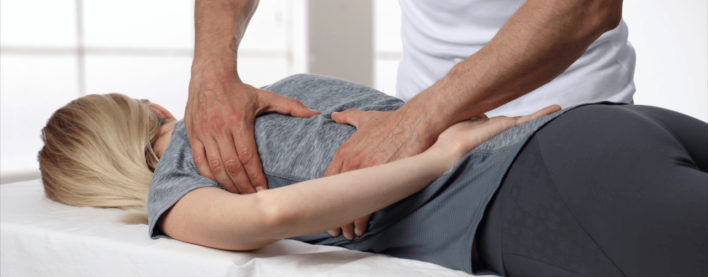
What manual therapy is NOT?
Manual therapy is not the well-known cracking of joints, although it has been associated with it. This cracking sound is literally a bubble (air) in the water (joint fluid). The cracking or otherwise intra-articular creaking is not a necessary component of a successful manual therapy session. On the contrary, it is the sound produced in the most aggressive techniques (high velocity thrust), which should be performed in the final stages of treatment, by experienced therapists and under certain conditions. In Biofeedback, such manipulations are performed when deemed necessary, but on the other hand, they are not necessarily performed in every treatment/session if it is not useful.
Manual therapy mobilizes joints and tissues but in no way “puts” a bone or vertebra back into place.
Manual therapy is not a magic technique-movement that magically solves all problems. It is a set of manipulations that facilitate the proper mobilization of a joint area, and a manual therapy session always includes active movement or exercise, even for reassessment purposes.
Manual therapy is not a technique that anyone can practice. Precisely because it is quite interventional, it requires a well-trained and certified therapist with a deep knowledge of anatomy, biomechanics and neurophysiology. Since it is fashionable for everyone to call themselves a manual therapist with a 2-day seminar, it is a good idea to ask for accreditation before leaving yourself in the hands of a physiotherapist.
Advantages of manual therapy
It can potentially be applied to literally all musculoskeletal problems and even in the acute stage.
It is a treatment that targets the cause and not the symptom, which is why recovery is usually complete and without relapses.
It is a much shorter treatment. In 4-6 treatments the result is most often impressive, while there will be improvement from the very first session.
Return to function, exercise or sport is faster, more complete and safer.
The overall quality of life improves dramatically as the patient understands what they have, learns how to deal with it effectively, and the problem is usually resolved permanently.

Biofeedback and manual therapy
Biofeedback is a certified manual therapy application center, using the most popular Maitland method.
Our therapists are graduates of the official school and members of the international IMTA Manual Therapy community.
The person in charge of our center is also an assistant professor at the official Maitland Manual Therapy seminars in Greece that take place at the Epimorfosis seminar center.
You can book an appointment today at 2104829303.
Morochliadis Stefanos
Physiotherapist Bcs, MT, RT, Formthotics specialist

