
Flat feet – A common biomechanical condition
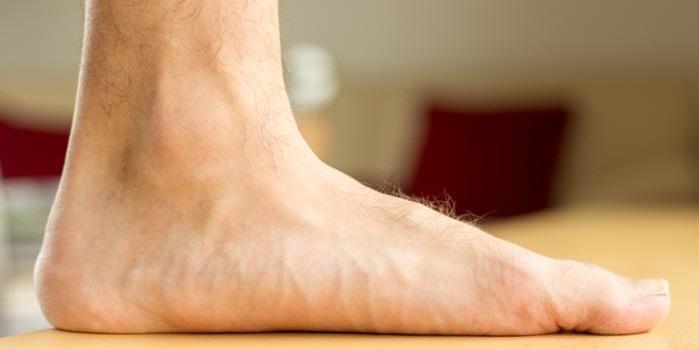
People with flat feet have a low or often flat arch.
When we talk about the arch of the foot we mean the curved part inside the foot tip, which is inserted between the heel and the metatarsals. This part normally should have a curvature and elasticity as it plays an important role in the gait cycle.

It is important to emphasize that the latest scientific data indicate that a slightly lower but asymptomatic foot arch is not necessarily considered pathological and therefore it is not biomechanically wise to correct it, as it may ultimately negatively affect the overall function of the body.
However, when the arch of the foot is very low/level and accompanied by clinical symptoms then it is classified as flatfoot.
Simple exercises and the placement of an orthotic insole are the usual and effective treatment.
Why does flat feet affect gait and ergonomics?
The human foot has 33 joints between 26 different bones. All of these are surrounded by more than 100 anatomical structures such as muscles, tendons and ligaments.
The foot arch is perhaps the most important factor in the correct redistribution of the enormous forces exerted on the foot during everyday activities such as walking, running, jumping and even standing. The arch should be both stabilising and elastic so that the forces are absorbed by all the above anatomical elements in a gentle and non-traumatic way.
When flatfooting occurs, all the forces, from the weight of the body and the reaction of the ground, are directed to the wrong biomechanical points, causing painful syndromes on the one hand and the characteristic incorrect position of the foot with an inward inclination, also known as hyperpronation.
It is important to mention that it is not necessary that the legs also suffer from the same degree of flat feet. For this reason, we always treat each foot limb as a separate anatomical entity, taking into account of course that the 2 foot limbs should cooperate harmoniously in movements and posture.
Flatfoot and Symptoms
The most common symptom in flat feet is of course pain. Many times the body creates compensatory measures and the flatfoot is not noticed by the person, as our feet generally spend most of their lives ‘hidden’ in shoes.
However, at some point the structural strengths of the anatomical elements reach the point of being exhausted, causing painful situations.
Some of these are sprains, tendinitis with the most common being plantar fasciitis, muscle injuries and ligamentous micro-injuries. Symptoms/injuries may also involve more distal joints such as the knees or even the lumbar spine (back).
The abnormal distribution of forces most often translates into an intense pressure on knee structures, causing over the years degeneration and structural changes with pain and dysfunction.
More generally, flat feet can affect areas such as
- ankle and Achilles tendon
- tibia/astrocnemius
- knee/ meniscus/ cruciate ligaments
- hip
- low spinal degrees
- basin
A frequent ”practical” sign – an indication of flatfoot – is the intense or rapid wear on the inside of the shoe as well as the appearance of a callus on the big toe, known as a bunion.
What causes flat feet?
The causes of flat feet are usually :
- genetic factors that cause the foot arch to deviate from normal
- an intensely sedentary lifestyle, where the leg arch becomes weak and cannot hold the weight of the body in an upright position and during activities
- disturbance of the arch after an ankle or heel injury (e.g. fracture)
- arthritis or rheumatoid arthritis
- injury or complete disruption of the continuity of the Achilles tendon
- neurological problems or muscle syndromes such as stroke, muscular dystrophy, cerebral palsy, multiple sclerosis, etc.
Of course, a very common reason for flat feet nowadays is obesity and diabetes mellitus.

A more ”normal” but quickly recoverable reason for the appearance is the extra pounds in a pregnancy.
Finally, as in all musculoskeletal problems, the degeneration of the plantar fascia due to age, can cause the gradual ”collapse” of the arch of the foot with the appearance of the corresponding concomitant problems such as pain in the foot and knee.
In children, various syndromes with developmental disorders result in flat feet.
Flat feet in children
Low arches are quite common in children, but are usually not pathological.
The constant, and often abrupt, growth may give the image of a bad arch, but what is happening is simply a constant adaptation to the constantly changing data of weight, height, tissue growth, etc.
Childhood obesity, however, is a major aggravating factor that can potentially establish flat feet.
In general, ”flat feet” in children is self-adjusting and corrects itself by puberty, so the parent does not need to be particularly concerned.
But if the child has problems and pain in walking or in daily activities, it is right to have a support with a specialized orthotic children’s foot orthosis.
In neurological and developmental problems it is almost imperative to have a correction of flat feet as such a move may be quite helpful in the course of a rehabilitation treatment plan.
In general, there are specific reasons to be concerned about your children’s feet.
Formthotics – The modern scientific answer to flat feet
Biofeedback is a certified application center of the revolutionary Formthotics method.
The method is approved by Foot Science International and follows the most up-to-date evaluation and application protocols based on the standards of examination and biomechanical analysis of manual therapy.

Our team has accredited therapists in the Formthotics method with many years of experience in the evaluation and fabrication of pedicles.
For us, flat feet is not a simple anatomical condition, but a clinical entity with multiple parameters that we have to take into account.
However, the materials used in the construction of Formthotics orthotic insoles are well-designed to offer comfort, correction and support of the arch of the foot and dynamic correction with the possibility of continuous adjustment based on the evolution of the individual’s condition.

They fit and fit all closed shoes and have a series of scientifically studied adjustments to bring biomechanical changes with the least intervention in the shortest time, without pain and discomfort!
Call us at 2104829303 and inquire or make your own appointment.

